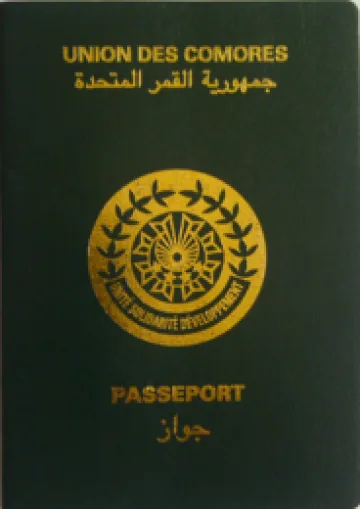
Regulation (EU) 2018/1806 listing visa-required and visa-exempt nationalities, consolidated text — EUR-Lex
法律依据: Regulation (EU) 2018/1806, Annex I (visa required) and Annex II (visa-exempt for stays of no more than 90 days in any 180-day period), consolidated to 30 December 2025
Regulation (EU) 2018/1806 listing visa-required and visa-exempt nationalities, consolidated text — EUR-Lex
法律依据: Regulation (EU) 2018/1806, Annex I (visa required) and Annex II (visa-exempt for stays of no more than 90 days in any 180-day period), consolidated to 30 December 2025
Visa Code (Regulation (EC) No 810/2009), consolidated text — EUR-Lex
法律依据: Regulation (EC) No 810/2009 establishing a Community Code on Visas, Article 16(1) (visa fee), Article 1(1) (stays not exceeding 90 days in any 180-day period) and Article 24(1) (a visa may be issued for one, two or multiple entries; validity up to five years, set on examination of each application), consolidated to 11 June 2024
This Regulation establishes the procedures and conditions for issuing visas for intended stays on the territory of the Member States not exceeding 90 days in any 180-day period.
The period of validity and/or the duration of stay of an issued visa shall be extended where the competent authority of a Member State considers that a visa holder has provided proof of force majeure or humanitarian reasons preventing him from leaving the territory of the Member States before the expiry of the period of validity of or the duration of stay authorised by the visa.
The Visa Code says applicants for a uniform visa must prove they hold adequate and valid travel medical insurance (for a multiple-entry visa, covering the first intended visit); it must be valid throughout the territory of the Member States, cover the entire intended stay or transit, and the minimum coverage is EUR 30,000. No official source we read requires it of visa-exempt visitors.
❝ 来源原文 (3)
Applicants for a uniform visa for one or two entries shall prove that they are in possession of adequate and valid travel medical insurance
Applicants for a multiple-entry visa shall prove that they are in possession of adequate and valid travel medical insurance covering the period of their first intended visit.
The insurance shall be valid throughout the territory of the Member States and cover the entire period of the person’s intended stay or transit. The minimum coverage shall be EUR 30 000
New to Denmark (nyidanmark.dk) — Go on visa-free travel
与来源核对日期: · 规定最近变更:
护照有效期
The Danish Immigration Service says a visa-free traveller's passport or travel document must be valid for three months past the intended date of departure from the Schengen area and must have been issued within the past 10 years.
❝ 来源原文 (1)
The passport or travel document must be valid for three months past the intended date of departure from the Schengen area. Moreover, the passport or travel document must have been issued within the past 10 years.
The Danish Immigration Service says visa-free visitors must have the necessary means to pay for their stay and return trip: as a general rule approx. DKK 350 per day, or approx. DKK 500 per day if staying at a hotel; a smaller amount may be accepted if you stay in a privately owned home and your host covers all the costs.
❝ 来源原文 (2)
You have the necessary means to pay for your stay and return trip.
As a general rule, you must have at your disposal approx. DKK 350 per day. A smaller amount may be accepted if you are staying in a privately owned home and your host will cover all the costs. If you are staying at a hotel, you must have a greater amount at your disposal, approx. DKK 500 per day.
No official source we could read states that a return or onward ticket is required. The UK Foreign Office tells British nationals that at Danish border control they may also need to show a return or onward ticket.
❝ 来源原文 (1)
At Danish border control, you may also need to: show a return or onward ticket
入境申报表: „EES — Entry/Exit System (biometric registration)”
The UK Foreign Office tells British travellers that when they travel into the Schengen area for short stays they may need to register biometric details such as fingerprints and a photo in the EU Entry/Exit System; on the first visit this may be at a special booth before the immigration desk. It says there is no cost for EES registration and nothing to do before you arrive at the border.
❝ 来源原文 (4)
This means that when you travel into the Schengen area for short stays, you may need to register your biometric details, such as fingerprints and a photo.
入境申报表: „ETIAS — European Travel Information and Authorization System”
The EU's ETIAS website says 30 European countries, Denmark among them, require visa-exempt travellers to have an ETIAS travel authorisation, but ETIAS is not yet in operation and no applications are being collected; the EU will announce the start date several months before launch.
❝ 来源原文 (4)
These 30 European countries require visa-exempt travellers to have an ETIAS travel authorisation:
Retsinformation (Danish official legal information) — Aliens Act, consolidated act LBK no. 1183 of 25/09/2025
法律依据: Udlændingeloven (LBK nr 1183 af 25/09/2025), § 25 b, § 32 stk. 1 nr. 1 og stk. 4 nr. 1 og 3, § 59 stk. 2
与来源核对日期: · 规定最近变更:
逾期停留
A foreigner staying in Denmark without the necessary permission may be expelled, and is punishable by a fine or imprisonment of up to 6 months; a repeat offence is an aggravating circumstance. An expelled foreigner is given an entry ban. For expulsion under § 25 b the ban is 2 years. It is 5 years for a third-country national expelled under § 25 b who entered in breach of an earlier such ban, or of a ban issued by another member state and recorded in SIS.
❝ 来源原文 (4)
§ 25 b. En udlænding kan udvises, hvis udlændingen opholder sig her i landet uden fornøden tilladelse.
Stk. 2. Med bøde eller fængsel indtil 6 måneder straffes den udlænding, som opholder sig her i landet uden fornøden tilladelse. Ved straffens udmåling skal det betragtes som en skærpende omstændighed, at overtrædelsen er begået i gentagelsestilfælde.
§ 32. Der fastsættes et indrejseforbud, hvorefter den pågældende udlænding ikke uden tilladelse på ny må indrejse og opholde sig på det i afgørelsen fastsatte område, jf. dog stk. 2 og 3, i følgende tilfælde: